WLCD

WLCD

A nonprofit wellness website designed to build trust and drive community engagement.

Overview

Overview

What Love Can Do (WLCD) is a 501(c)(3) nonprofit wellness organization based in Tucson, Arizona, founded on the belief that the body holds an innate capacity to restore balance when given the right conditions. The organization integrates heart-brain coherence practices, meditation, sound healing, red light therapy, Reiki, and breathwork into a community-centered model of holistic wellbeing. The design scope covered the full public-facing website: a mission-led homepage, an in-depth about page, a research and stories hub, a what-we-do modalities page, a support/donation page, and a contact page. All designed to communicate credibility, warmth, and accessibility to a broad audience of community members, donors, and wellness seekers.

Role

Design Lead

Services

Website Design · Brand Experience · UX Design · Information Architecture

Status

text

Stack

Figma, Photoshop, Illustrator, After Effects

Industry

B2B

Challenge

Challenge

Designing the WLCD website meant building a coherent digital presence for an organization that operates at the intersection of science, spirituality, and community care. A space that requires careful tone calibration. The challenge was to present alternative wellness modalities (sound healing, energy-based therapies, frequency technologies) with integrity and without overclaiming, while still communicating the emotional depth of the foundation's mission. Simultaneously, the site needed to function as a donor acquisition tool, a content platform for research and stories, and an educational resource, all within a unified, trust-building experience.

Designing the WLCD website meant building a coherent digital presence for an organization that operates at the intersection of science, spirituality, and community care. A space that requires careful tone calibration. The challenge was to present alternative wellness modalities (sound healing, energy-based therapies, frequency technologies) with integrity and without overclaiming, while still communicating the emotional depth of the foundation's mission. Simultaneously, the site needed to function as a donor acquisition tool, a content platform for research and stories, and an educational resource, all within a unified, trust-building experience.

Story-before-program information architecture

Story-before-program information architecture

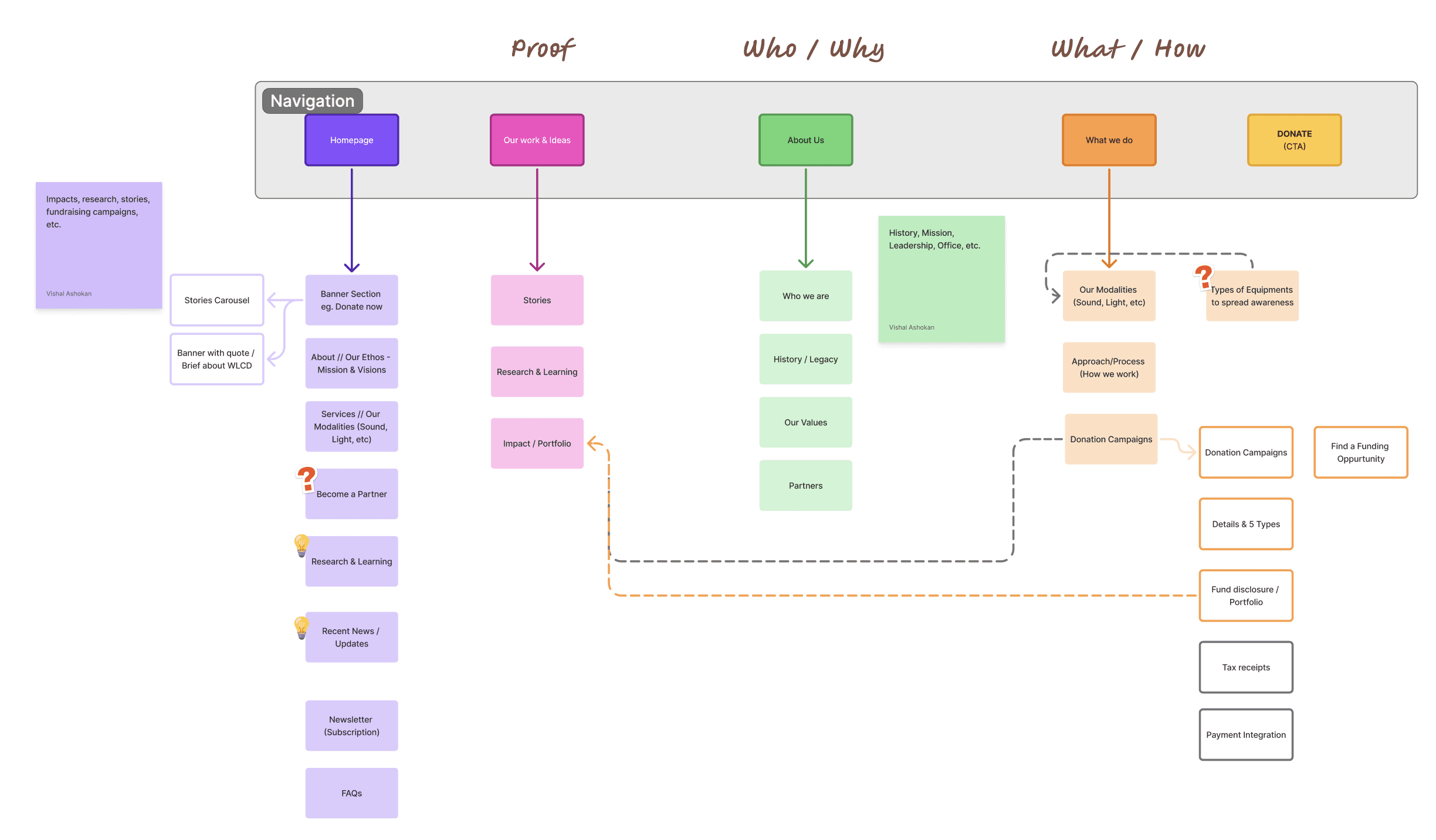
The site consistently leads with the human story, why WLCD exists, who it was created for, what change it is trying to make, before introducing programs or donation asks. This sequencing reflects the organization's own philosophy: relationship before transaction.

The site consistently leads with the human story, why WLCD exists, who it was created for, what change it is trying to make, before introducing programs or donation asks. This sequencing reflects the organization's own philosophy: relationship before transaction.

Research and personal narrative as a dual content engine

Research and personal narrative as a dual content engine

The content section publishes both research-led explorations (sound therapy, red light, breathwork, Reiki) and first-person community stories like Derek Trujillo's documented healing journey. This dual format broadens the audience and deepens credibility simultaneously.

The content section publishes both research-led explorations (sound therapy, red light, breathwork, Reiki) and first-person community stories like Derek Trujillo's documented healing journey. This dual format broadens the audience and deepens credibility simultaneously.

Integrity-first framing around alternative modalities

Integrity-first framing around alternative modalities

Every mention of sound healing, energy systems, and light-based therapies is consistently paired with responsible framing, "holistic wellness services, not medical treatment." This is a deliberate design choice that protects both the organization's credibility and its community.

Every mention of sound healing, energy systems, and light-based therapies is consistently paired with responsible framing, "holistic wellness services, not medical treatment." This is a deliberate design choice that protects both the organization's credibility and its community.

Transparent giving experience with community context

Transparent giving experience with community context

The donation page contextualizes each giving category : scholarships, community programs, wellness technology, safe spaces, education. Donors understand the direct impact of their contribution before they give, not after.

The donation page contextualizes each giving category : scholarships, community programs, wellness technology, safe spaces, education. Donors understand the direct impact of their contribution before they give, not after.

Create a free website with Framer, the website builder loved by startups, designers and agencies.