[OVERVIEW]
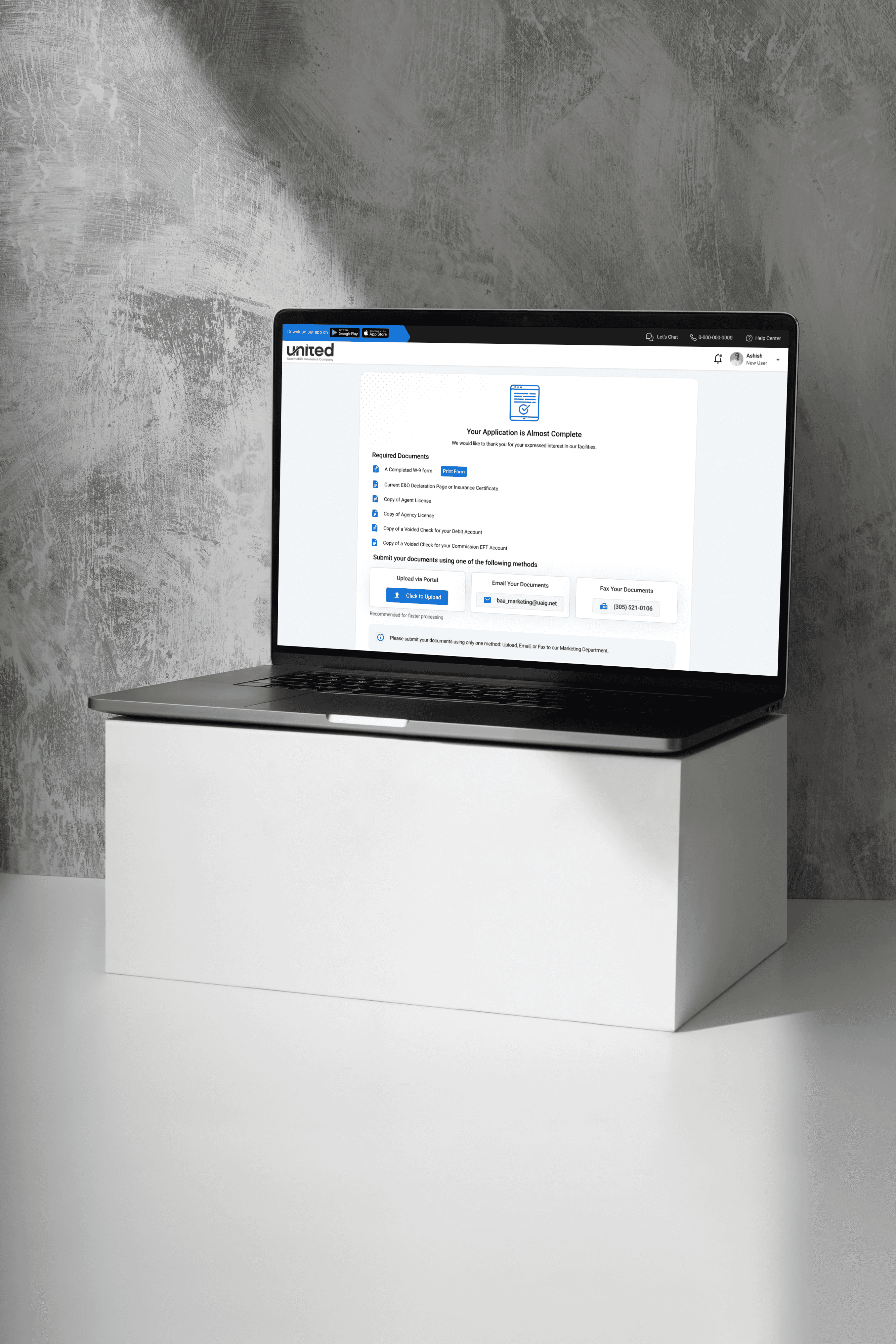
This project involved revamping and redesigning the existing website of United Automobile Insurance Company (UAIC). The goal was to improve the digital experience for agencies or brokerages applying for appointments by creating a more intuitive and visually modern interface. The design strategy focused on clarity, ease of navigation, and responsive adaptability for mobile devices, enhancing accessibility and user engagement.
Platform
Website & Mobile Responsive design
Category
Automobile Insurance Company
Location
Texas, USA
Client
UAIC
Year
2025
[ PROBLEM ]
The client’s existing website was outdated and lacked a streamlined, user-centric design for the agency or brokerage appointment process. The interface was not mobile responsive, and users faced difficulty in navigating and completing the multi-step application form, leading to poor form completion rates and a disjointed user experience.
[BEHIND THE SHOT]
Implemented a clean and modern visual design using a consistent design system with clear hierarchy, whitespace, and accessible typography to improve readability and user focus.
Redesigned the homepage to highlight key services and CTA (Call-to-Action) buttons such as “Sign Up Now” prominently, reducing cognitive load and directing users towards the application process.
Structured the multi-step appointment form into clearly numbered steps, showing progress indicators to provide users with a sense of control and understanding of the process.
Used form validation and clear field labeling to reduce errors and improve form usability.
Applied mobile-first principles to ensure responsive design, enabling smooth interactions on smaller devices. Key elements were reorganized for vertical scrolling and touch-friendly input fields.
Added downloadable form links and contextual help to empower users to self-serve and reduce reliance on customer support.
Designed the hamburger menu for mobile screens to organize navigation links compactly, improving accessibility without overwhelming the user.
Focused on usability heuristics such as consistency, error prevention, and visibility of system status to enhance user confidence and reduce friction.